 Labradoodle House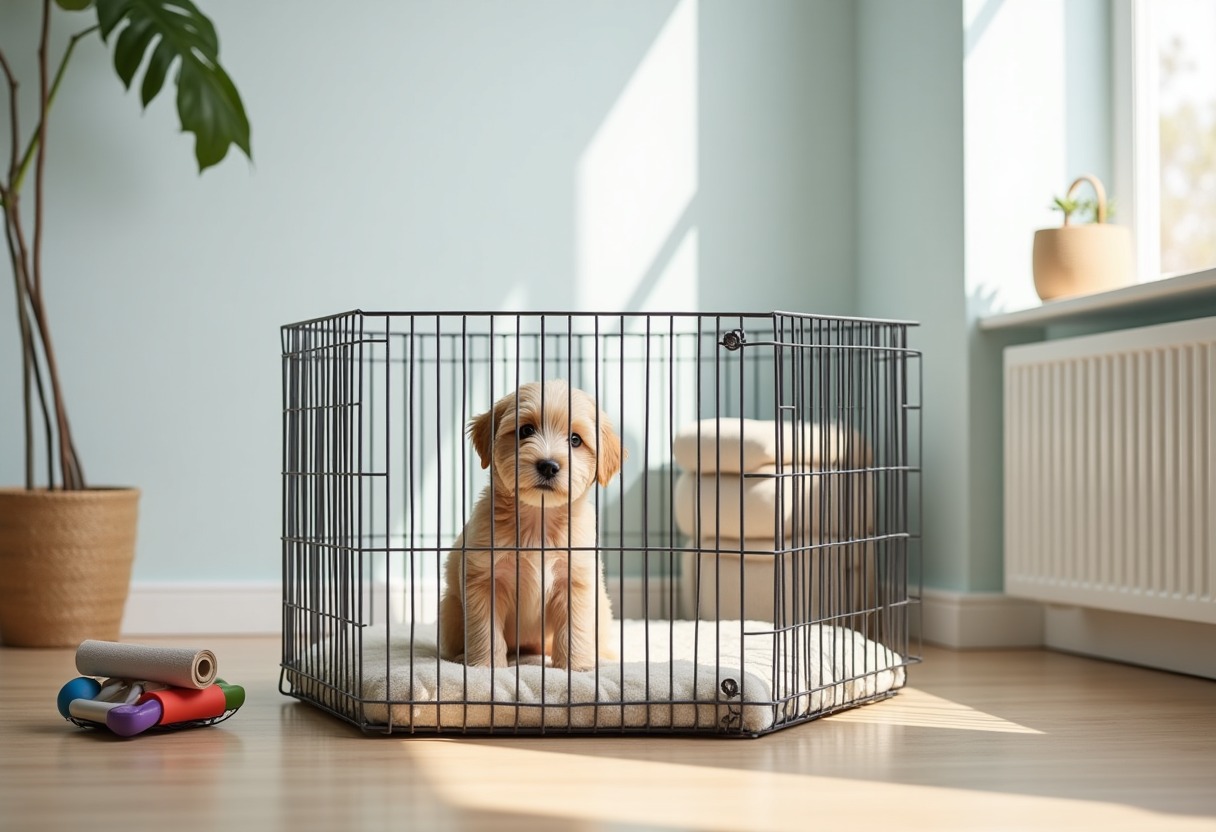
Your Labradoodle puppy arrives in three weeks, and you're staring at conflicting gear lists written for generic puppies. Labradoodles aren't generic—their fleece or wool coats mat within 48 hours if you skip daily brushing, they grow from 15 pounds to 50+ pounds in six months, and their retriever instincts mean they'll chew through gear designed for lap dogs.
Why Labradoodle-Specific Gear Matters
Most puppy checklists assume short coats and predictable sizes. Labradoodles challenge both assumptions. Their double-layered coats require slicker brushes from day one, not months later when matting already exists. The American Kennel Club notes that large-breed puppies need controlled growth rates to prevent joint issues—buying a single set of bowls and expecting them to work for a year wastes money.
Standard Labradoodles reach 50-65 pounds. Mediums hit 30-45 pounds. Miniatures stay around 15-25 pounds. Your puppy's adult size determines crate dimensions, harness types, and whether that "adjustable" collar actually adjusts enough. An F1b Labradoodle (75% Poodle) typically has tighter curls than an F1 (50% Poodle), requiring different grooming tools from week one. Understanding your puppy's generation matters—read our F1 Vs F1b Labradoodle guide if you're unsure what yours is.
Containment and Safety Gear (Weeks 1-4)
The first month centers on safe spaces while your puppy learns house rules. You need three containment zones: a crate for sleep and travel, a playpen for supervised free time, and gates to block dangerous areas.
Crate sizing by projected adult weight:
- Miniatures: 30" crate (works through adulthood)
- Mediums: 36" crate with divider
- Standards: 42" crate with divider
Buy the adult size immediately and use the divider panel to create a puppy-appropriate space. Your Labradoodle should stand without hitting their head and turn around comfortably, but excess space encourages bathroom accidents. Our Best Dog Crates Labradoodles 2026 guide details specific models that handle the breed's chewing habits.
→ Shop puppy playpen exercise pen on Amazon
Exercise pens create a safe zone for play when you're home but need hands free. Look for 36" height minimum—Labradoodle puppies jump by 12 weeks. Metal pens withstand chewing better than plastic, and models with door panels let you enter without dismantling the entire setup.
→ Shop puppy gate indoor on Amazon
Pressure-mounted gates work for doorways you'll remove them from frequently. Hardware-mounted gates belong at stairways where a tumbling puppy could get seriously hurt. Skip mesh gates—those paws and teeth will shred them within days.
Feeding Supplies That Adapt to Rapid Growth
Labradoodle puppies eat 3-4 times daily until six months, then transition to twice daily. Their food requirements jump from 1.5 cups daily at 8 weeks to 4+ cups daily by 6 months for Standards. You need bowls that accommodate changing portions without encouraging gulping.
| Supply Type | 8-12 Weeks | 3-6 Months | 6-12 Months | |-----------------|----------------|----------------|-----------------| | Food bowl capacity | 2 cups | 3 cups | 4+ cups | | Water bowl capacity | 3 cups | 6 cups | 8+ cups | | Bowl height (Standards) | Floor level | 4" raised | 8" raised | | Feeding frequency | 4x daily | 3x daily | 2x daily |
→ Shop puppy food bowls raised on Amazon
Raised bowls prevent neck strain and reduce air intake during eating—both relevant for large-breed puppies prone to bloat. Adjustable stands let you increase height as your puppy grows. Stainless steel bowls outlast ceramic or plastic and don't harbor bacteria in scratches.
Slow feeders matter for the 60% of Labradoodles who inhale their food. Our Labradoodle Food Puzzles Slow Feeders post explains which designs work for different face shapes, but for puppies under 4 months, start with a basic slow-feed bowl that adds 2-3 minutes to meal time without frustrating them.
Labradoodles develop "doodle beard" by 3 months—that fluffy chin hair that soaks up water. Standard bowls create permanent wet beards that smell like swamp water by evening. Check our Best Labradoodle Water Fountains Beard Friendly guide for designs that keep chins dry, or use elevated bowls with narrow openings.
Food storage matters more than most owners expect. A 30-pound bag of large-breed puppy food goes stale after two weeks if you leave it in the original bag. Airtight containers with wheels let you move 40+ pounds of food easily while keeping it fresh. See our Best Labradoodle Food Guide for specific food recommendations.
Coat-Care Essentials (Start Day One)
Waiting to brush until your puppy's coat "gets long enough" guarantees matting by 12 weeks. Labradoodle coats transition from soft puppy fluff to adult texture between 6-12 months, and this transition period creates mats faster than any other stage of life.
Start with a pin brush and slicker brush. Use the pin brush daily for face, ears, and legs. Use the slicker brush on the body, brushing in layers from skin to tip. Five minutes daily prevents the hour-long dematting sessions that make puppies hate grooming. Our Best Slicker Brushes Labradoodle Coat Maintenance post covers specific models, but for puppies, prioritize gentler pins over aggressive slickers.
Your puppy needs their first haircut around 4-5 months, before their adult coat fully emerges. Book grooming appointments in 6-week intervals. Between professional visits, you'll need:
- Slicker brush (soft or medium pins for puppies)
- Metal comb (7-8" length, rotating teeth)
- Detangling spray
- Puppy-safe shampoo for monthly baths
- High-velocity dryer (air-drying creates mats)
Our Complete Labradoodle Grooming Guide and 2026 03 28 Best Labradoodle Grooming Tools posts detail exactly which tools work for different coat types. For puppies specifically, avoid human clippers—they overheat and catch in dense undercoats.
Dematting tools shouldn't be necessary if you brush daily, but have one on hand for the inevitable behind-the-ear tangles. Our Best Labradoodle Dematting Tools Techniques guide shows how to remove mats without cutting coat length.
Nail care starts at 8 weeks. Puppies need nail trims every 2-3 weeks until they're walking on pavement regularly. Get your puppy comfortable with paw handling immediately—it makes vet visits and grooming exponentially easier. See our Best Labradoodle Nail Clippers Paw Care Guide for specific clipper types and technique.
Walking and Training Gear That Fits Changing Bodies
Your puppy will wear 2-3 different collar sizes and harness sizes in their first year. Buy cheap adjustable gear for the first three months, then invest in quality pieces once growth slows around 7-8 months.
Collar fit check: Two fingers should slide between collar and neck. Labradoodles grow so fast that weekly checks prevent choking. Breakaway collars prevent strangulation if the collar catches on something. Read our Best Labradoodle Collars Guide for detailed sizing by age.
Harness over collar for leash training: Harnesses distribute pressure across the chest instead of the trachea, preventing damage during the inevitable puppy pulling stage. Front-clip harnesses give you better control than back-clip styles. Our Best Dog Harnesses Labradoodles 2026 guide covers adjustable models that adapt through growth spurts.
Leash length and material: Start with a 4-foot leash for basic training, add a 6-foot leash by 4 months for loose-leash walking practice. Skip retractable leashes until your puppy has solid recall—they teach pulling behavior. Biothane leashes resist the water, mud, and chewing that Labradoodles inflict on gear. Check our Best Dog Leashes Labradoodles 2026 for specific recommendations.
Labradoodles are smart enough to learn basic commands by 10 weeks. Our How To Train A Labradoodle guide covers the complete training timeline, but for supplies, you need:
- Treat pouch (hands-free during training sessions)
- High-value training treats (tiny pieces, soft texture)
- Clicker (optional but speeds up marker training)
- Long line (15-30 feet for recall practice in unfenced areas)
→ Shop puppy training pads holders on Amazon
Training pads belong in the pen area if you live above ground floor or can't take your puppy out every 2 hours overnight. Holders prevent your puppy from shredding and eating the pads—a common and expensive vet visit cause.
Sleep, Play, and Comfort Gear
Labradoodles under 4 months sleep 18-20 hours daily. They need a den-like crate space with bedding that's warm but not shred-able. Skip the $80 orthopedic beds until after your puppy finishes teething around 7 months—they'll destroy anything soft.
For crates, use:
- Washable crate pads (buy 2-3 for rotation during accidents)
- Crate cover to create darkness for sleep
- Safe chew toy attached to crate bars
Once your puppy proves they won't shred bedding (usually 8+ months), transition to a real dog bed. Our Best Dog Beds Labradoodles 2026 guide covers which styles support their joints and tolerate their coat type.
→ Shop puppy teething toys on Amazon
Teething hits hard between 3-7 months. Labradoodles need harder toys than most breeds—their retriever jaw strength destroys standard plush toys in minutes. Rotate between:
- Rubber toys (Kong, Nylabone)
- Rope toys (for tug, not solo chewing)
- Frozen treats (carrot sticks, apple slices)
- Bully sticks (supervise to prevent choking)
Our Best Toys For Labradoodles and Best Toys Enrichment Labradoodles guides detail age-appropriate choices. For puppies, prioritize toys that satisfy the chewing instinct over complex puzzle toys—save those for 6+ months when attention span improves.
Travel and Weather Gear
Your puppy needs car safety gear before their first vet visit at 8 weeks. Unrestrained dogs become projectiles in accidents, and Labradoodles who learn to roam freely in cars develop anxiety about being contained later. Our Best Dog Car Seats Travel Safety Gear Labradoodles guide covers crash-tested options, but for puppies, a properly secured crate works until they're large enough for a harness system.
Labradoodles tolerate cold better than heat thanks to their double coat, but puppies under 6 months lack full coat density. Below 40°F, add a sweater or coat for outdoor time. Our Labradoodle Winter Coats Sweaters Warm Without Matting guide shows which styles work with curly coats.
Paw protection matters more than most owners expect. Hot pavement above 80°F burns paw pads, and winter salt causes chemical burns. Our Best Dog Boots Labradoodles guide helps you find boots your puppy will actually keep on—most hate them initially but accept them with positive reinforcement training.
FAQ
When should I start grooming my Labradoodle puppy at home? Start brushing the day your puppy arrives home, even if their coat seems short. Labradoodle coats transition from puppy fluff to adult texture between 6-12 months, and this period creates mats faster than any other life stage. Daily 5-minute brushing sessions during puppyhood teach your dog to tolerate grooming and prevent the hour-long dematting battles that create lifelong grooming anxiety. Use a soft slicker brush on the body and a pin brush on the face and ears, working in sections from skin to tip.
What size crate does a Labradoodle puppy need? Buy your puppy's adult-size crate immediately and use the divider panel to adjust space as they grow. Miniature Labradoodles need 30" crates, Mediums need 36" crates, and Standards need 42" crates. The crate should allow your puppy to stand without hitting their head, turn around completely, and lie down with legs extended—but excess space encourages bathroom accidents. Move the divider back every 3-4 weeks as your puppy grows, removing it entirely once they're house-trained and near adult size around 10-12 months.
How often do Labradoodle puppies need their nails trimmed? Trim nails every 2-3 weeks until your puppy walks on pavement regularly enough to naturally wear them down. You'll hear clicking on hard floors when nails are too long, usually before you see the nails extending past the paw pad. Start nail handling and trimming at 8 weeks even if the nails don't seem long—early positive experiences prevent the fear and resistance that make adult nail care nearly impossible. Most Labradoodles need monthly trims throughout life since their retrieving heritage means less natural abrasive wear than herding or working breeds.
Should I use a collar or harness for my Labradoodle puppy? Use both: a collar for ID tags and a front-clip harness for leash training. Collars put pressure directly on the trachea during pulling, which can damage your puppy's developing neck structures during the 8-16 week period when they don't understand leash pressure. Front-clip harnesses redirect pulling energy to the side instead of rewarding it with forward momentum, making loose-leash training faster and safer. Transition to back-clip harnesses or collar walking once your Labradoodle walks politely on leash, usually around 6-8 months with consistent training.
Do Labradoodle puppies need raised food bowls? Raised bowls benefit medium and standard Labradoodles by reducing neck strain and decreasing air intake during eating—both relevant for large-breed puppies at higher risk for bloat. Start with bowls at floor level for puppies under 3 months, then raise them to elbow height as your puppy grows, typically 4" high at 3-6 months and 8" high after 6 months for Standards. Miniature Labradoodles can use floor-level bowls throughout life without issues. Adjustable raised bowl stands accommodate rapid growth without requiring multiple purchases, and the elevation helps keep those signature Labradoodle beards cleaner and drier during meals.
Your Labradoodle puppy's first year moves fast—that 15-pound fluffball becomes a 50-pound teenager in six months, requiring gear upgrades you didn't anticipate. Buy crates, grooming tools, and training equipment sized for adult dogs from day one, then fill gaps with cheap adjustable gear that you'll replace as your puppy grows. The money you save skipping undersized purchases buys the quality brushes and dryers that keep that coat mat-free for the next 12-15 years.
Some links on this page are affiliate links. We may earn a small commission if you purchase through them, at no extra cost to you.
As an Amazon Associate we earn from qualifying purchases. This article contains affiliate links; if you buy through them we may earn a small commission at no additional cost to you.