 Labradoodle House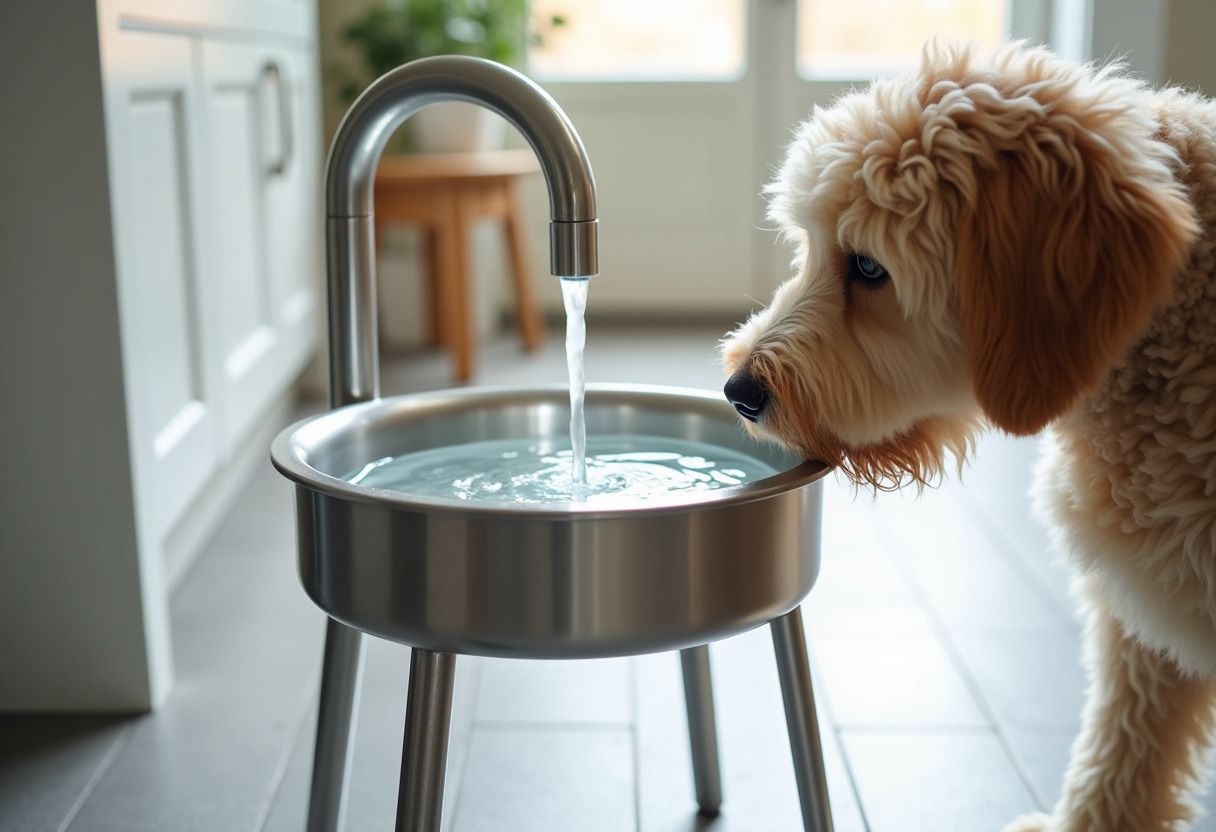
That soaking wet beard after every drink isn't just annoying—it's a matting time bomb. Labradoodles with longer facial furnishings can develop tight tangles under the chin and around the muzzle within 48 hours of persistent dampness, and standard water bowls practically guarantee your dog's beard stays saturated. The right labradoodle water fountain or bowl design keeps facial hair drier, reduces the bacterial load that causes that sour smell, and cuts your face grooming time in half.
Why Labradoodle Beards and Standard Water Bowls Don't Mix
Labradoodle facial furnishings—the longer hair around the muzzle, chin, and cheeks—act like a sponge. According to the American Kennel Club, dogs with facial hair require specific bowl designs to prevent moisture accumulation and bacterial growth. Standard bowls with wide openings force your dog to submerge their entire muzzle to reach water, especially as the level drops. That beard then drips across your floors, holds onto food particles from meals, and creates the perfect environment for yeast and bacteria.
Wet beards mat faster than any other part of the coat. The combination of saliva, water, food debris, and constant movement under the chin creates friction that tangles individual hair shafts into tight knots. Once these form, they pull on the skin and trap more moisture, creating a cycle that's miserable for your dog and frustrating to manage. Most doodle owners discover this the hard way after finding a solid mat under the chin that requires professional removal.
Elevation matters for medium to large Labradoodles. Bowls at ground level force an awkward neck angle that pushes the beard deeper into the water. Raising the water source to chest height allows your dog to drink with their head in a more neutral position, keeping more of that facial hair above the waterline. This single change can reduce beard saturation by 60-70% in dogs with 2-3 inch furnishings.
What Makes a Water Fountain or Bowl Beard-Friendly
Beard-friendly designs share specific features that standard bowls ignore. The opening diameter directly affects how much facial hair contacts water—narrower openings (4-6 inches for Labradoodles) allow your dog to drink without dunking their entire face. Depth matters equally: shallow, wide bowls are terrible for beards, while deeper, narrower vessels keep water away from facial furnishings.
Spill-proof edges and low-splash designs prevent the secondary soaking that happens when water sloshes onto the floor and your dog walks through it, then licks their paws and transfers that moisture to their face during grooming. Fountains with continuous flow keep water moving, which reduces biofilm formation—that slimy layer you feel on the inside of bowls after a day or two. Biofilm harbors the bacteria responsible for beard odor and skin irritation.
Material choice affects cleaning frequency. Stainless steel resists bacterial colonization better than plastic and won't harbor scratches where microbes hide. Ceramic works well for static bowls but can chip. Plastic fountains degrade under UV exposure and develop micro-scratches that become bacterial havens within six months of daily use. If you're already managing Best Labradoodle Grooming Tools for coat maintenance, choosing the right water vessel is part of that same system.
Best Water Fountain Designs for Labradoodles
Elevated fountains with narrow drinking wells outperform standard designs for doodles. The PetSafe Drinkwell Platinum fountain style—with a raised platform and 5-inch drinking opening—keeps beards significantly drier than wide-basin models. The elevation brings water to chest height for most adult Labradoodles (adjustable platforms work for growing puppies), and the continuous stream encourages drinking without face-dunking.
→ Shop elevated dog water fountain on Amazon
Stainless steel fountains eliminate the plastic taste some dogs avoid and stay cleaner between deep washes. The Dogit Stainless Steel Drinking Fountain uses a center tower design that creates a narrow drinking zone—your dog laps from the flowing stream rather than plunging their face into a reservoir. The 11-cup capacity works for multi-dog households or all-day hydration without refills.
→ Shop stainless steel dog fountain on Amazon
Spill-proof fountain designs with weighted bases prevent the tipping disasters that happen when enthusiastic Labradoodles bump the bowl mid-zoomies. Look for models with rubber feet or bases that exceed 12 inches in diameter. The stability keeps water contained and prevents the carpet-soaking events that lead to beard soaking when your dog investigates the spill.
→ Shop spill proof dog water fountain on Amazon
Static Bowl Options: When Fountains Aren't Practical
Some households can't accommodate electric fountains—no nearby outlets, concerns about cords, or dogs who fear the pump sound. Elevated static bowls with specific design features work as beard-friendly alternatives. Raised feeders that bring the bowl rim to your dog's chest height reduce beard dipping by changing the drinking angle.
The narrow-opening stainless steel bowls designed for spaniels transfer perfectly to Labradoodles. These typically measure 5-6 inches across the top and 3-4 inches deep, forcing a more precise drinking technique that keeps facial hair above the waterline. The tapered shape also reduces water displacement—less sloshing means less splash onto the beard.
→ Shop raised dog water dish on Amazon
No-drip bowls with inward-curving rims catch water that would otherwise cascade off your dog's beard. These work through simple physics—the curved lip creates a drip edge that channels water back into the bowl rather than onto the floor or beard. Combine this with elevation and you have a low-maintenance system that keeps beards 70% drier than standard bowls.
→ Shop beard friendly dog bowl on Amazon
Comparison: Fountain vs. Static Bowl for Labradoodle Beards
| Feature | Elevated Fountain | Narrow Static Bowl | Standard Wide Bowl | |---------|------------------|-------------------|-------------------| | Beard dryness | 80-90% reduction in saturation | 60-70% reduction | Baseline (fully saturated) | | Cleaning frequency | Every 3-4 days (pump disassembly) | Daily rinse, deep clean 2x/week | Daily rinse, deep clean 2x/week | | Initial cost | $45-80 | $25-40 | $8-15 | | Power requirements | Outlet access needed | None | None | | Biofilm prevention | Excellent (moving water) | Moderate (requires frequent changes) | Poor (static water) |
The fountain advantage becomes obvious after a week—moving water stays fresher longer and actively discourages biofilm growth. Static bowls require twice-daily water changes to maintain comparable freshness, but they cost half as much and never need pump replacement. For Labradoodles with heavy furnishings (3+ inches), the fountain's narrow drinking well makes the biggest difference in beard management.
Product Recommendations: Tested for Doodle Beards
For most Labradoodles (30-60 lbs): The Pioneer Pet Raindrop fountain in stainless steel combines elevation, narrow drinking access, and a 96-ounce capacity. The center tower creates a natural drinking zone that keeps beards above water level, and the stainless construction cleans easily in the dishwasher. The pump runs quietly enough that noise-sensitive dogs adapt within 2-3 days.
For multi-dog households or large Labradoodles (60+ lbs): PetSafe Drinkwell Platinum with adjustable flow control. The 168-ounce reservoir handles multiple dogs without constant refilling, and the elevated ramp design accommodates different drinking styles. The replaceable carbon filter removes impurities that contribute to biofilm, extending time between deep cleans to 5-6 days.
For budget-conscious or fountain-averse households: The Loving Pets Dolce Diner elevated feeder with a narrow stainless bowl insert. Adjustable height settings grow with your puppy, and the 24-ounce stainless insert (5.5-inch diameter) fits dishwashers. The elevated design alone reduces beard soaking by 50-60% compared to floor-level bowls.
For extreme beard savers: Spaniel-specific deep bowls like the Neater Pets Cone. The 8-inch depth and 5-inch opening force a more controlled drinking technique. Your dog learns to lap from the surface rather than plunging their face, which keeps ears and beards almost completely dry. Takes 3-4 days for most dogs to adjust to the narrow opening.
For travel or secondary locations: Collapsible elevated bowls with carabiner attachments. These work for car trips, outdoor adventures, or grandparents' houses. While not as beard-friendly as permanent solutions, the elevation factor alone makes them superior to standard travel bowls. Pair with your regular Best Dog Car Seats Travel Safety Gear Labradoodles setup.
Maintenance Strategies That Actually Work
Daily rinses don't count as cleaning. Biofilm forms within 24 hours on any surface exposed to dog saliva and water. For fountains, this means weekly pump disassembly with warm soapy water and a dedicated brush (never use the kitchen sponge). The intake tube and impeller collect the most debris—food particles, hair, mineral deposits—and these directly affect water quality.
Vinegar soaks every two weeks dissolve mineral buildup that soap misses. Fill the fountain with equal parts white vinegar and water, run the pump for 5 minutes, then let it sit for 30 minutes before thorough rinsing. This prevents the white crust that forms around water lines and keeps the pump running efficiently. For static bowls, a 10-minute vinegar soak loosens biofilm before scrubbing.
Replace fountain filters on the manufacturer's schedule, not when they look dirty. Carbon filters lose effectiveness long before visible degradation. Most require replacement every 2-4 weeks depending on water hardness and dog count. The cost ($15-20 for a 3-pack) is worth the reduction in beard odor and skin irritation.
Pre-rinse beards after drinking if your dog has 3+ inch furnishings. Keep a dedicated beard towel near the water station and quickly blot (don't rub) the facial hair immediately after drinking. This removes 80% of the moisture before it soaks through to the undercoat, preventing the mat-causing dampness that persists for hours. This habit pairs with your regular Complete Labradoodle Grooming Guide routine.
What Most Owners Miss About Water Stations
Location matters more than most realize. Placing water bowls in high-traffic areas increases the chance your dog drinks after exercise, which is when they need it most, but also raises contamination from foot traffic. The kitchen corner near the back door balances accessibility with cleanliness—your dog drinks when coming inside from the yard, and the hard flooring handles splashes better than carpet.
Water temperature affects drinking frequency. Most dogs prefer slightly cool water (60-65°F), which fountains maintain better than static bowls in warm houses. In winter, avoid placing fountains near heating vents that warm the water past 75°F—dogs drink 30% less when water exceeds room temperature. This matters for Labradoodles prone to urinary issues or those on Labradoodle Health Supplements requiring increased fluid intake.
The beard-drying station concept: dedicated microfiber towels stationed near water sources. Train your dog to accept a quick beard blot after drinking by pairing it with a treat. Within two weeks, most Labradoodles voluntarily approach the towel station after drinking. This 10-second habit prevents 90% of beard-related matting and eliminates the crusty, smelly beard problem entirely.
Mat prevention between the Best Labradoodle Dematting Tools Techniques sessions starts with water management. Even the best bowl can't prevent all moisture, but combining elevation, narrow openings, and immediate post-drink blotting reduces grooming effort by half. The furnishings stay fluffier, smell neutral, and develop fewer tangles that require professional attention.
FAQ
What's the ideal water bowl height for a 50-pound Labradoodle? Measure from the floor to your dog's chest (where the front legs meet the body)—typically 18-20 inches for a 50-pound adult Labradoodle. The bowl rim should sit 1-2 inches below this measurement, allowing them to drink with their head level or slightly lowered, not reaching down at a 45-degree angle. Adjustable elevated feeders let you fine-tune as your dog grows or if you have multiple dogs with different heights. The correct height keeps the beard above the waterline during normal drinking and reduces neck strain for dogs with joint sensitivities.
How often should I actually clean a dog water fountain? Disassemble and clean the entire fountain—bowl, pump, tubing, filter housing—every 3-4 days minimum, more frequently in humid climates or multi-dog households. Biofilm develops within 24-48 hours and creates the slimy texture you feel on fountain surfaces. Use hot soapy water and a bottle brush for tubes, rinse thoroughly, and air dry all components before reassembly. Replace carbon filters every 2-4 weeks regardless of appearance. The pump itself should be soaked in vinegar solution monthly to prevent mineral buildup that reduces flow and increases noise.
Can I use a regular elevated feeder with any bowl for beard protection? The bowl shape matters as much as elevation—wide, shallow bowls in elevated stands still allow full beard submersion. Choose bowls with 5-6 inch diameters and 3-4 inch depths to create the narrow drinking zone that keeps facial hair dry. Stainless steel bowls work better than plastic inserts that came with the feeder, as they resist bacterial colonization and clean more thoroughly. The combination of proper height and narrow bowl diameter delivers 70% better beard dryness than elevation alone. Test the setup by watching your dog's drinking technique—their beard should stay mostly above the water surface during normal lapping.
Why does my Labradoodle's beard still smell even with a fountain? Smell indicates bacterial or yeast colonization, which happens when any moisture remains in the beard for extended periods. Even beard-friendly fountains leave some dampness, and if you're not actively drying that facial hair post-drink, bacteria multiply in the warm, moist environment under the chin. Implement post-drink beard blotting with a dedicated microfiber towel, and wash the beard twice weekly with a diluted solution of dog-safe shampoo (use the same formula from your Best Dog Shampoo Doodles Curly Coat routine). If the smell persists after consistent drying, check for trapped food particles in longer furnishings or consult your vet about possible skin fold dermatitis.
Do puppies need different water bowls than adult Labradoodles? Puppies under 6 months benefit from shallow, wide bowls or very low elevation (2-4 inches) because their drinking coordination is still developing and their chest height changes weekly. Transition to beard-friendly elevated designs around 6-8 months when facial furnishings start growing in and their adult height becomes predictable. Adjustable elevated feeders work best during the growth phase from 4-12 months, allowing you to raise the bowl weekly as your puppy grows. For puppies already showing 1-2 inch furnishings, start beard-drying habits early—the training is easier when they're young, and you'll prevent matting problems before they start.
The right water fountain or bowl setup cuts your beard maintenance time in half while keeping your Labradoodle's face healthier between grooming sessions.
Some links on this page are affiliate links. We may earn a small commission if you purchase through them, at no extra cost to you.
As an Amazon Associate we earn from qualifying purchases. This article contains affiliate links; if you buy through them we may earn a small commission at no additional cost to you.