 Labradoodle House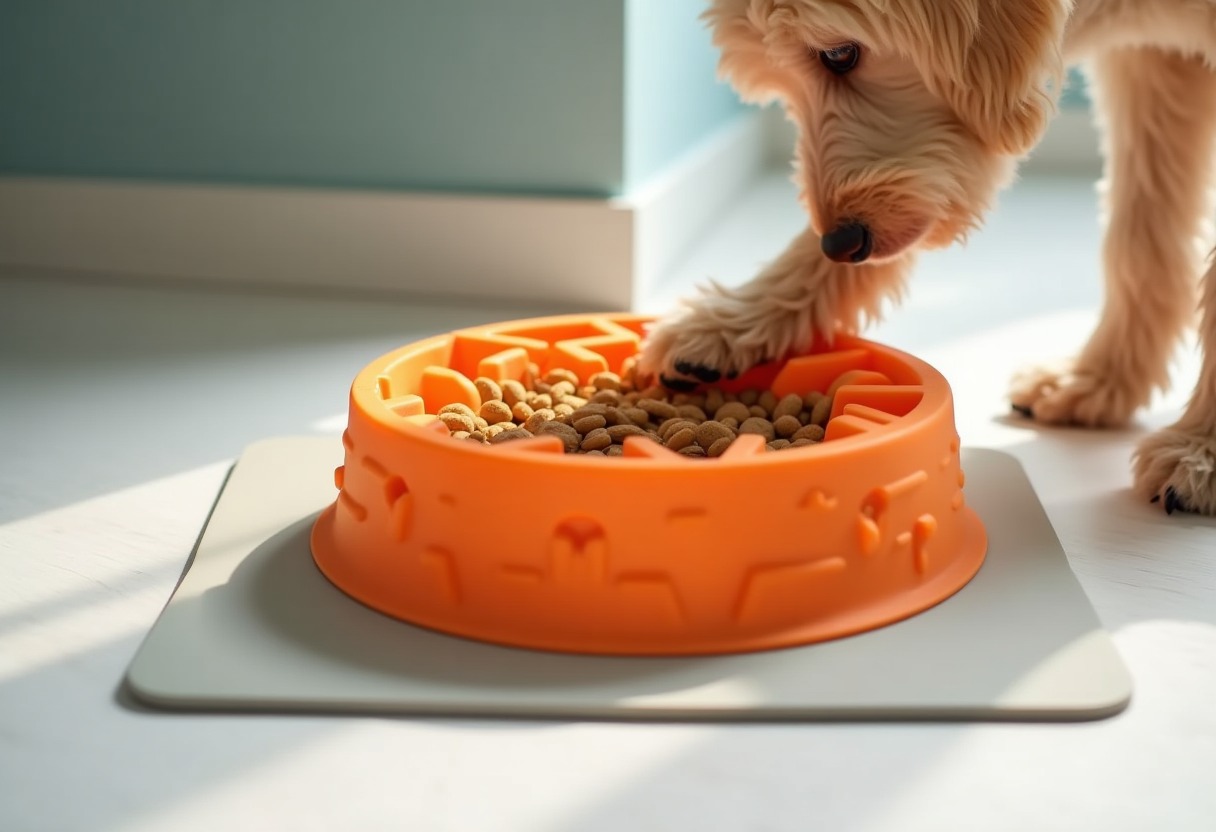
Your labradoodle inhales their kibble in 30 seconds, then spends the next hour searching for crumbs while their brilliant mind goes unstimulated. Food puzzles and slow feeders transform mealtime from a mindless gulp-fest into engaging mental exercise that satisfies your doodle's need for problem-solving while promoting healthier digestion.
Why Labradoodles Need Mental Stimulation Through Food
Labradoodles inherit intelligence from both parent breeds — poodles rank second in canine intelligence studies, while labrador retrievers excel at food motivation and problem-solving. This combination creates dogs that crave mental challenges, especially around food activities. Without adequate mental stimulation, labradoodles develop destructive behaviors, excessive barking, and anxiety.
The American Kennel Club emphasizes that mental exercise can tire dogs as effectively as physical exercise. A 15-minute puzzle feeding session provides cognitive stimulation equivalent to a 30-minute walk. For coat-conscious owners, this matters because stressed, under-stimulated dogs often develop compulsive grooming behaviors that damage their curls.
Fast eating creates serious health risks. Labradoodles who gulp food face increased bloat risk, poor nutrient absorption, and choking hazards. Slow feeders reduce eating speed by 300-500%, allowing proper digestion and preventing the post-meal lethargy that leads to matting from excessive lying down.
Types of Food Puzzles and Slow Feeders for Labradoodles
Food puzzles fall into four categories, each targeting different aspects of your doodle's intelligence and eating habits. Slow feeder bowls use physical obstacles to reduce eating speed, while puzzle feeders require problem-solving skills to access food.
Stationary puzzle bowls feature built-in mazes, ridges, or compartments that force dogs to work around obstacles. These work best for kibble and work well for labradoodles who eat at consistent locations. The textured surfaces also provide mild mental stimulation as dogs navigate different patterns to reach food.
Rolling and wobbling feeders dispense food as dogs push, nose, or paw the toy. These satisfy your labradoodle's retrieving instincts while controlling portion release. Movement-based feeders work exceptionally well for high-energy doodles who need physical engagement with mental challenges.
→ Shop slow feeder dog bowls on Amazon
Multi-level puzzle systems require sequential problem-solving — lifting lids, sliding compartments, or rotating sections to access different food chambers. Advanced puzzles challenge your labradoodle's spatial reasoning and memory skills, perfect for preventing boredom in intelligent dogs.
Treat-dispensing toys release small amounts of food through controlled openings as dogs manipulate the toy. These create longer engagement periods and work well for training reinforcement. Many treat dispensers adjust difficulty levels, growing with your dog's puzzle-solving abilities.
Comparison of Popular Labradoodle Food Puzzle Types
| Puzzle Type | Eating Time Extension | Mental Difficulty | Best For | Cleanup Effort | |-------------|---------------------|------------------|-----------|----------------| | Slow Feeder Bowl | 3-5x longer | Low | Fast eaters, multiple dogs | Easy - dishwasher safe | | Wobble Dispenser | 10-15x longer | Medium | High energy, solo feeding | Medium - requires disassembly | | Multi-Level Puzzle | 15-20x longer | High | Smart dogs, boredom issues | High - multiple components | | Treat Ball | Variable | Medium | Training, portion control | Easy - single opening |
Choose puzzle difficulty based on your labradoodle's current problem-solving experience. Start with simpler options like slow feeder bowls, then advance to complex puzzles as your dog masters each level. Mismatched difficulty creates frustration — too easy causes boredom, too hard leads to giving up.
Product Recommendations for Labradoodle Food Puzzles
For Beginners: Slow Feeder Bowls
Outward Hound slow feeders offer the best entry point for puzzle feeding. Their Fun Feeder series features various maze patterns sized appropriately for labradoodle snouts. The non-slip base prevents sliding, crucial for enthusiastic eaters who push bowls across floors. Food-safe materials and dishwasher compatibility make daily cleaning effortless.
→ Shop dog puzzle feeders on Amazon
For Active Dogs: Motion-Based Dispensers
Nina Ottosson puzzle toys provide graduated difficulty levels perfect for labradoodles' learning progression. Level 1 puzzles introduce basic problem-solving, while Level 3 challenges require multiple steps and sequential thinking. The wooden construction withstands heavy use, and replaceable parts extend product lifespan.
For Advanced Problem-Solvers: Multi-Chamber Systems
Trixie Activity Strategy Games offer complex feeding challenges that can occupy intelligent labradoodles for 20-30 minutes per meal. These systems feature sliding compartments, rotating discs, and hidden chambers that require different manipulation techniques. Adjustable difficulty settings prevent frustration while maintaining engagement.
→ Shop interactive dog toys food on Amazon
For Training Integration: Treat-Dispensing Balls
Kong Classic and Wobbler toys excel at combining feeding with training exercises. Fill with kibble or wet food for mealtime engagement, or use treats for training rewards. The unpredictable bouncing patterns satisfy chase instincts while controlling food release rates.
For Multiple Dogs: Separated Feeding Solutions
Elevated slow feeder stations work well for households with multiple labradoodles. Individual puzzle bowls prevent food competition while maintaining the mental stimulation benefits. Raised feeding positions also reduce neck strain for taller labradoodles.
→ Shop treat dispensing toys on Amazon
Advanced Feeding Strategies for Maximum Mental Stimulation
Rotate puzzle types weekly to prevent habituation and maintain cognitive challenge. Monday's slow feeder bowl becomes routine by Friday, but introducing a wobble dispenser reactivates problem-solving centers. Keep 3-4 different puzzle types in rotation, storing unused options to maintain novelty.
Create feeding schedules that align with natural activity patterns. Most labradoodles show peak alertness in early morning and early evening — perfect times for complex puzzles that require focused attention. Use simpler slow feeders for midday meals when dogs naturally feel less energetic.
Temperature affects puzzle difficulty and engagement. Frozen puzzle toys extend eating time and provide additional sensory stimulation. Mix wet food with kibble in puzzle feeders, then freeze overnight. Thawing creates varying textures and scents that maintain interest throughout the meal.
Combine puzzle feeding with your existing training routine. Use basic commands like "wait" or "gentle" before allowing access to food puzzles. This integration reinforces training while building impulse control around food rewards. Many labradoodle owners report improved recall and attention after implementing structured puzzle feeding.
Link puzzle complexity to your dog's energy levels and behavior. High-energy days warrant more challenging puzzles that require physical manipulation and longer engagement. Lower-key days call for gentler slow feeders that provide mental stimulation without overwhelming tired dogs.
Consider your Best Labradoodle Food Guide recommendations when selecting puzzle-compatible foods. Kibble size affects puzzle performance — too large pieces jam in small openings, while tiny kibble flows too quickly through maze channels.
→ Shop dog food puzzles on Amazon
FAQ
How long should it take my labradoodle to finish a puzzle feeder meal?
Target 10-15 minutes for most puzzle feeding sessions. This timeframe provides adequate mental stimulation without creating frustration or excessive fatigue. Fast eaters should initially aim for 5-8 minutes, gradually increasing duration as puzzle-solving skills improve. If your labradoodle finishes under 3 minutes, increase difficulty level or switch to a more complex puzzle type.
Can I use wet food in puzzle feeders designed for kibble?
Most puzzle feeders accommodate wet food with proper preparation techniques. Mix wet food with small amounts of kibble or freeze in puzzle compartments to prevent excessive messiness. Avoid wet-only feeding in intricate maze bowls as liquid pools in corners and becomes difficult to clean. Combination feeding works best — use wet food as high-value puzzle components mixed with dry kibble for structure.
Should I supervise my labradoodle during puzzle feeding sessions?
Initial puzzle feeding requires supervision to ensure proper use and prevent frustration behaviors like aggressive chewing or giving up entirely. Most labradoodles need 3-5 supervised sessions to understand puzzle mechanics, after which independent feeding becomes safe. Continue monitoring dogs who show resource guarding tendencies or destructive behavior around food puzzles. Remove puzzles if dogs attempt to dismantle rather than solve them.
How do I clean food puzzles with complex designs and small crevices?
Effective puzzle cleaning requires immediate rinsing after each use to prevent food residue buildup in small spaces. Use bottle brushes, toothbrushes, or specialized puzzle cleaning tools to reach narrow channels and compartments. Soak stubborn residue in warm, soapy water for 10-15 minutes before scrubbing. Many puzzle feeders offer dishwasher-safe components, though hand washing typically provides better results for intricate designs.
At what age should I introduce puzzle feeders to my labradoodle puppy?
Start puzzle feeding around 12-16 weeks once puppies establish consistent eating routines and basic coordination skills. Begin with simple slow feeder bowls that require minimal problem-solving but extend eating time. Avoid complex puzzles until 4-6 months when cognitive development supports multi-step problem solving. Puppy-specific puzzles with larger openings and gentler challenges work best during the introduction period. Monitor closely for appropriate engagement versus frustration levels.
Transform mealtime from a 30-second inhale session into engaging mental exercise that keeps your labradoodle's brilliant mind satisfied while supporting healthy digestion — because a mentally stimulated doodle is a well-behaved doodle.
Some links on this page are affiliate links. We may earn a small commission if you purchase through them, at no extra cost to you.
As an Amazon Associate we earn from qualifying purchases. This article contains affiliate links; if you buy through them we may earn a small commission at no additional cost to you.