 Labradoodle House
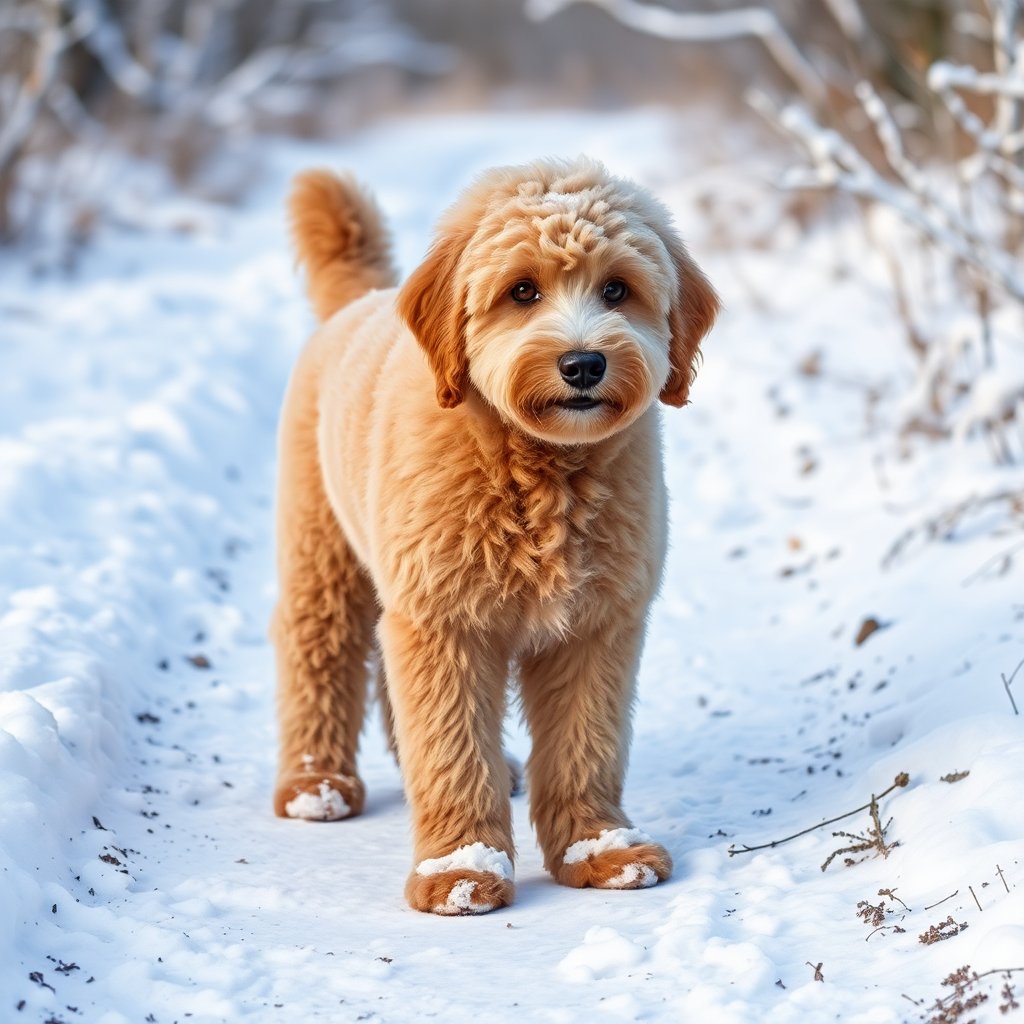
Every doodle parent who lives somewhere with real winter knows the scene. You head out for a ten-minute walk with a fluffy dog and come back with a dog wearing a hundred tiny snowballs. They hang off the legs, pack between the toes, cluster on the belly, and turn the beard into a frozen mop. Your Labradoodle starts walking like the floor is lava, then tries to chew the ice off.
This happens to doodles far more than to smooth-coated breeds, and it is not just cosmetic. Ice packed between the pads is uncomfortable, it can tug on skin, and the clumps that get chewed or yanked out often leave behind a fresh mat. The good news: a little coat prep and a smarter after-walk routine make winter walks much easier.
As an Amazon Associate we earn from qualifying purchases. We only suggest product types we would use on our own dogs.
Why Snow Sticks to Doodle Coats
Curly and wavy coats act like a net. A fleece or wool coat has countless small loops and crimps. Snow lands, the dog's body heat melts the outer layer slightly, and it refreezes onto the hair shaft. Each new flake sticks to the last one, and the clump grows with every step.
Longer leg and paw hair is the main culprit. The hair on a doodle's feet and lower legs is usually the longest and least trimmed area of the coat. Fur that grows between the toe pads is a perfect anchor point for ice balls.
Wet, heavy snow is the worst. Light powder at very cold temperatures tends to brush off. Wet snow around freezing clumps fast and packs hard. Late-fall and early-spring storms are usually the worst for snowballs.
Damp coats freeze faster. A doodle who was bathed and not fully dried, or who went out with a damp undercoat, will collect ice faster. If you bathe in winter, a thorough dry matters even more. Our guide to drying tools and techniques after bathing covers how to get a doodle dry to the skin.
Step 1: Trim Before the Snow Arrives
Prevention starts with the feet. The single most effective thing you can do is keep the fur between and around the paw pads short.
Trim the hair between the pads. The American Kennel Club recommends keeping the hair between the toes trimmed on long-haired breeds so snow and ice have less to grip. Their paw care guide walks through basic paw cleaning and inspection. Use a small cordless trimmer or round-tip scissors, and trim the fur level with the pads, not down into the skin.
Tidy the "doodle slippers." Ask your groomer for neat, rounded feet rather than full fluffy slippers for winter. A tighter foot outline collects far less snow.
Consider a slightly shorter leg and belly length. You do not need a full shave-down, and you should not do one in winter since the coat is insulation. Going one guard length shorter on the lower legs and belly is a good middle ground. Discuss this with your groomer before the first big storm.
Keep the coat mat-free. Mats trap moisture and ice, and snowballs tend to form right on top of existing tangles. A good brush-out once or twice a week through winter pays off.
→ Shop quiet paw trimmers and round-tip grooming scissors on Amazon
Step 2: Prep the Coat Before Every Walk
Apply a paw wax or balm. A thin layer of paw wax on the pads and between the toes creates a barrier that helps snow slide off and gives some protection against salt. Work it in with your fingers right before you go out. Pick a dog-specific product, since your doodle will probably lick some of it off.
Use a light coat spray on the legs. A leave-in conditioner or detangling spray on the lower legs and belly can make it a bit harder for ice to bond to the hair. It also makes brushing out afterward much easier. Avoid heavy oils that leave the coat greasy and attract grime.
Try boots for long walks or heavy snow. Boots solve the paw problem completely if your dog tolerates them. They do not help the legs or belly, but they keep ice out from between the pads and keep salt off the skin. Fit matters a lot on doodle feet; see our breakdown of the best dog boots for Labradoodles for sizing tips and how to get your dog used to them.
Add a snood or a full-body suit for deep snow. If your doodle loves to plow through drifts, a fleece-lined snow suit that covers the legs keeps the worst of the clumps off. The catch is friction, since some coats rub the fur and cause mats. Our guide to winter coats that keep doodles warm without matting explains which fabrics and fits are gentle on curly hair.
→ Shop dog paw wax and winter paw balm on Amazon
Step 3: Remove Ice Balls the Right Way
The instinct is to grab a snowball and pull. Please do not. Ice is frozen to the hair shaft, and pulling rips out hair, irritates skin, and leaves broken, frizzy fur that tangles quickly.
Melt, don't pull. The AKC's advice is to soften ice with a warm, wet towel rather than yanking it. Soak a washcloth in warm (not hot) water, wrap it around the clump, and gently squeeze. The ice will loosen in seconds.
Use a bowl of warm water for packed paws. For a dog covered in snowballs, set a shallow tub or bowl of lukewarm water by the door. Dip each foot for a few seconds and the ice melts away. A portable paw washer cup works well for this and also rinses off salt and grit at the same time.
Skip the hair dryer on high heat. It is tempting, but high heat close to the skin can burn and dries out the coat. If you use a dryer, keep it on a cool or low-warm setting and keep it moving. A high-velocity dryer on low is ideal for blasting water out of the coat once the ice is melted.
Towel dry thoroughly. Water left in the coat after melting will refreeze on the next trip outside, and damp curls tangle as they dry. Blot first, then press with a microfiber towel. Do not rub hard in circles, which creates friction mats.
Brush once fully dry. A quick pass with a slicker brush and a metal comb on the legs and belly catches any tangles the ice started before they tighten.
→ Shop paw washer cups and microfiber dog towels on Amazon
Ice Melt, Road Salt, and Doodle Paws
Snowballs are annoying; de-icing chemicals can be harmful. Sidewalks and roads are often treated with rock salt (sodium chloride) or other chloride-based products. These can dry, crack, and irritate paw pads, and a doodle that licks its feet afterward swallows some of it.
Rinse after every walk. Even if your dog looks clean, wipe or rinse the paws, legs, and belly when you get home. Fluffy leg hair holds salt crystals easily.
Use pet-friendly ice melt at home. Products marketed as pet-safe are generally gentler, but "pet-safe" is a marketing term rather than a guarantee. They still should not be eaten in quantity. Spread them on your own steps and driveway, and store the bag where your dog cannot reach it.
Watch for signs of trouble. Licking or chewing the paws, limping, redness, or cracked pads are signs that something is bothering your dog. If you think your doodle has eaten ice melt, antifreeze, or another winter chemical, call your veterinarian or the ASPCA Animal Poison Control Center right away. Antifreeze (ethylene glycol) is an emergency even in small amounts.
→ Shop pet-friendly ice melt on Amazon
Quick Winter Routine for Doodle Parents
Here is a simple routine that works for most families:
| When | What to do | | --- | --- | | Every 3 to 4 weeks | Trim fur between paw pads and tidy feet | | Before the walk | Paw wax on pads; light spray on legs; boots if needed | | During the walk | Avoid salted paths when possible; keep walks shorter in wet snow | | At the door | Warm water dip or warm towel to melt ice; rinse salt | | After | Towel dry, then a low-heat or cool dry to the skin | | Once dry | Quick brush and comb on legs, belly, and beard |
Don't Forget the Beard and Ears
The beard freezes too. A doodle who buries their face in snow comes back with an ice-crusted beard. Melt it with a warm cloth the same way you would a paw. A quick wipe also keeps the beard from staying damp, which can lead to a musty smell and staining.
Ears can trap moisture. Floppy, hairy doodle ears hold snow and water. After a snowy romp, dry the ear flaps and check that the canal is not wet. Damp ears are a common setup for ear problems in this breed.
Watch the belly and "armpits." Friction areas behind the front legs and on the belly mat easily in winter because ice clumps tug at the hair every step. Give those spots extra attention during brushing.
When to Call the Vet or Groomer
Most snowball problems are about comfort and coat care, but a few situations warrant a professional:
- Cracked or bleeding pads, or pads that look red and raw after walks.
- Limping that doesn't go away after the paws are warm and dry.
- Pale, gray, or hard skin on the ears, tail tip, or paws after a long time in the cold, which can be a sign of frostbite.
- Shivering, weakness, or lethargy after cold exposure.
- Mats that are tight against the skin. Ice-related mats on the legs and belly can get bad quickly. A groomer can safely remove them; cutting mats at home with scissors is a common cause of skin injuries.
Puppies, seniors, and small minis lose heat faster than a full-sized adult doodle. Shorten their walks on very cold or wet days.
Frequently Asked Questions
Are snowballs in dog fur dangerous? Usually not on their own, but they can be uncomfortable, pull on the skin, and contribute to matting. Ice packed between the paw pads is the bigger concern, since it can make walking painful. Remove ice promptly and check for cuts or irritation.
Should I shave my Labradoodle in winter to stop snowballs? No. The coat is insulation. Instead, keep the feet trimmed and tidy and consider a slightly shorter length on the lower legs and belly. A full shave-down in winter leaves a doodle cold.
Do dog boots stop snowballs? They stop ice from packing between the toes and protect pads from salt. They do not stop snowballs forming higher up on the legs and belly, so pair them with a coat spray or snow suit for deep snow.
Is pet-safe ice melt actually safe? It is gentler than standard rock salt but not risk-free. Rinse paws after walks and keep your dog from licking treated surfaces or eating the product.
The Bottom Line
Snowballs are part of life with a curly-coated dog, but they do not have to ruin winter walks. Keep the paw fur trimmed, use a paw wax and a light coat spray before heading out, melt ice off with warm water instead of pulling, and dry the coat fully before brushing. Rinse off road salt every time. With that routine in place, your Labradoodle can enjoy the snow while you skip the hour-long de-icing session at the door.
As an Amazon Associate we earn from qualifying purchases. This article contains affiliate links; if you buy through them we may earn a small commission at no additional cost to you.