 Labradoodle House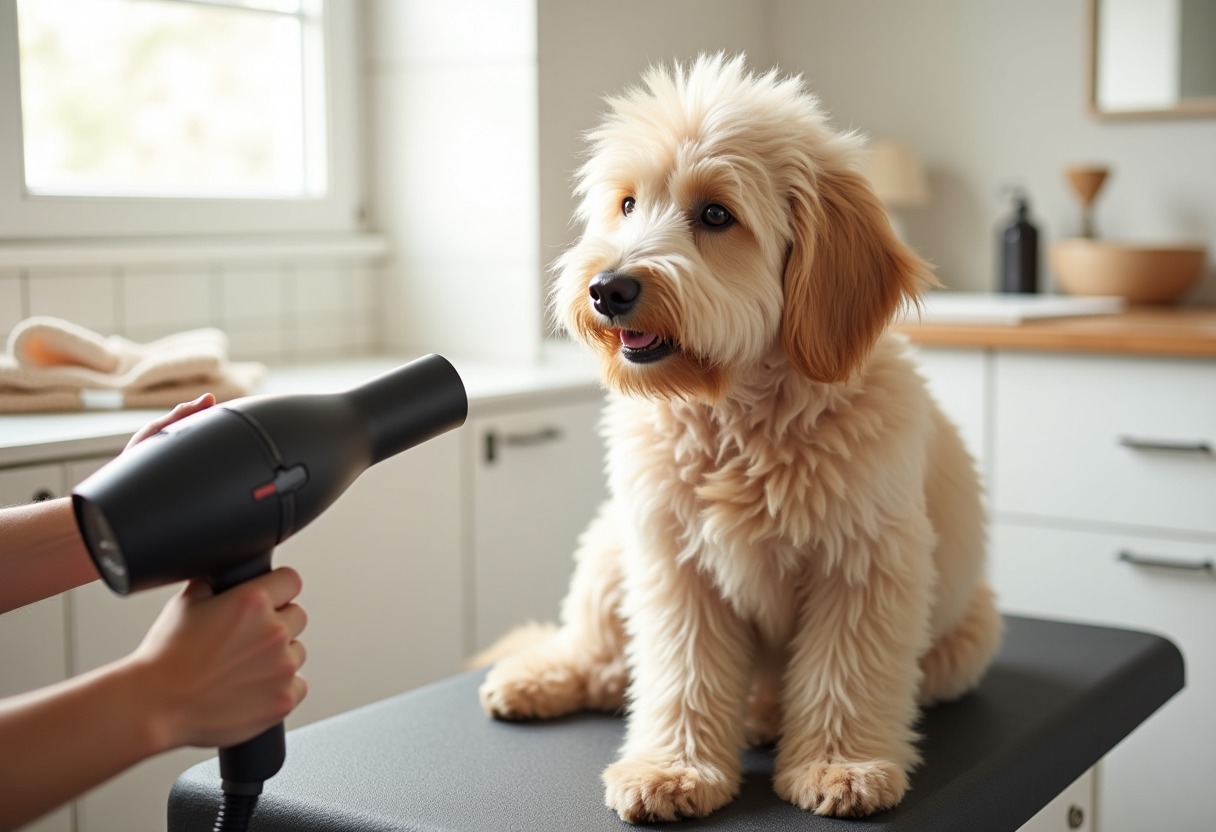
Your Labradoodle steps out of the bath looking like a soggy poodle-lab mix, and you have exactly 30 minutes before that wet coat becomes a matted nightmare. The difference between a fluffy, tangle-free coat and hours of brushing out mats comes down to your drying technique and the tools you choose.
Why Proper Drying Makes or Breaks Your Labradoodle's Coat
Wet Labradoodle coats are vulnerable coats. The American Kennel Club explains that wet hair is more elastic and prone to breakage, making improper drying a fast track to matting and coat damage. With Labradoodles carrying anywhere from loose waves to tight curls, each hair type demands specific drying approaches to maintain texture and prevent tangles.
Professional groomers understand that air-drying a Labradoodle coat creates the perfect storm for matting. As the coat dries naturally, individual hairs curl and twist around each other, forming knots that tighten as moisture evaporates. The undercoat, common in many Labradoodles, compounds this problem by trapping moisture against the skin for hours.
Temperature control matters more than speed. Excessive heat damages the hair cuticle, leading to brittle, frizzy coats that matt more easily. The goal isn't just removing water—it's preserving coat structure while preventing the tangling that occurs during the drying process.
Essential Drying Tools for Every Labradoodle Owner
The right → Shop dog blow dryer on Amazon transforms post-bath chaos into manageable grooming sessions. Professional-grade pet dryers move significantly more air than human hair dryers while operating at safer temperatures for prolonged use on thick coats.
High-velocity dryers excel at pushing water out of dense Labradoodle coats rather than simply evaporating moisture with heat. These machines produce concentrated airflow that separates individual hairs, preventing them from clumping together as they dry. Variable speed controls let you adjust intensity based on your dog's comfort level and coat sensitivity.
Forced-air dryers represent the gold standard for thick, curly coats. Unlike cage dryers that circulate warm air, forced-air systems blast room-temperature air through concentrated nozzles, making them ideal for dogs sensitive to heat. The powerful airflow reaches through multiple coat layers, drying from the skin outward.
Stand dryers offer hands-free operation, allowing you to brush and manipulate the coat while maintaining consistent airflow. These professional-style units feature adjustable arms and variable controls, making them perfect for detailed work on problem areas like legs, ears, and the underbelly where matting commonly occurs.
Comparing Drying Methods for Labradoodle Coats
| Method | Drying Time | Mat Prevention | Heat Damage Risk | Best Coat Type | |--------|-------------|----------------|------------------|----------------| | High-Velocity Dryer | 15-25 minutes | Excellent | Low | All coat types | | Forced-Air System | 20-30 minutes | Excellent | None | Curly, thick coats | | Traditional Blow Dryer | 30-45 minutes | Poor | High | Light, wavy coats only | | Air Drying | 2-4 hours | Very Poor | None | Not recommended |
Professional-Grade Equipment Worth the Investment
Stand dryers like the Metro Air Force Commander provide the hands-free control professional groomers rely on daily. The adjustable arm positions the nozzle exactly where needed while your hands remain free to brush and separate coat sections. Variable speed controls accommodate sensitive dogs while maintaining the airflow needed for thorough drying.
Handheld high-velocity units offer portability and precision for spot-drying problem areas. → Shop pet grooming dryer on Amazon models with multiple nozzle attachments let you customize airflow patterns for different coat sections. The concentrator nozzle works perfectly for directing air between coat layers, while the wider attachment covers large areas efficiently.
Microfiber drying towels absorb exponentially more water than standard towels, reducing overall drying time and minimizing the window for mat formation. → Shop dog drying towels on Amazon made specifically for pets feature longer fibers that penetrate curly coats without snagging.
Detangling sprays applied before drying create slip between individual hairs, reducing friction that leads to matting. → Shop detangling spray dogs on Amazon formulations with silicones provide lasting protection throughout the drying process.
Quality slicker brushes with flexible pins work alongside your dryer to separate coat sections and prevent tangles from forming. → Shop slicker brush for drying on Amazon models designed for use during blow-drying feature heat-resistant pins and ergonomic handles for extended grooming sessions.
Advanced Drying Techniques Most Owners Skip
Pre-drying preparation determines your success before you turn on any equipment. After rinsing thoroughly following your Best Dog Shampoo Doodles Curly Coat routine, gently squeeze excess water from legs, ears, and tail using your hands. Avoid rubbing motions that encourage tangling.
Apply leave-in conditioner or detangling spray while the coat remains saturated. This creates lubrication between hair strands as they begin to dry, significantly reducing mat formation. Work the product through with your fingers, paying special attention to areas prone to matting like behind the ears, under the legs, and around the collar area.
Sectional drying prevents the overwhelming task of tackling an entire wet Labradoodle at once. Start with the underside—legs, belly, and chest—where matting occurs most frequently. These areas dry fastest and often get overlooked until mats have already formed. Use a slicker brush to separate hair sections while directing airflow from skin to tip.
The "fluff and lift" technique creates volume while preventing compaction. Hold sections of coat up and away from the body while directing airflow underneath and through the hair. This method ensures air reaches the undercoat where trapped moisture causes the most problems. Rotate coat sections systematically, never moving to the next area until the previous section feels completely dry to the touch.
Temperature transitions help set the coat structure. Once a section dries completely with warm air, finish with a 30-second cool air blast to close the hair cuticle and lock in the desired texture. This professional finishing technique reduces frizz and helps curls maintain their shape between grooming sessions.
Frequently Asked Questions
How long should I spend drying my Labradoodle after every bath? Plan for 20-30 minutes of active drying time with proper equipment, though this varies significantly based on coat density and length. Rushing the process creates more work later when you're dealing with mats that could have been prevented with thorough drying. Dogs with thicker, curlier coats may require up to 45 minutes of drying time, while those with looser waves might be ready in 15-20 minutes. The investment in proper drying time saves hours of brushing and potential professional grooming costs to remove severe matting.
Can I use a regular human hair dryer on my Labradoodle? Human hair dryers lack the airflow volume needed for thick dog coats and operate at temperatures that can burn sensitive skin during extended use. While acceptable for emergency touch-ups on small areas, they're inadequate for full-coat drying and increase matting risk due to insufficient air movement through dense fur layers. Professional pet dryers move 2-3 times more air at safer temperatures, making them essential for proper Labradoodle coat care. The motor duty cycles in human dryers aren't designed for the 20-30 minutes of continuous operation required for thick coats.
What's the biggest mistake people make when drying their Labradoodle? Stopping too soon ranks as the most common and costly error in Labradoodle drying. Coats that feel dry on the surface often retain moisture deep in the undercoat, creating perfect conditions for matting as that hidden dampness slowly evaporates and tightens hair bonds. Always check skin-level dryness by parting the coat down to the skin and feeling for residual moisture. Areas that feel even slightly damp need additional drying time, as overnight air-drying of these spots typically results in mat formation by morning.
Should I brush while drying or dry first then brush? Simultaneous brushing and drying produces superior results compared to sequential approaches, but requires coordination and proper tools. Use a slicker brush with heat-resistant pins to lift and separate coat sections while directing airflow through the lifted hair. This technique prevents individual hairs from clumping together as they dry while ensuring air reaches all coat layers. Brushing dry coat after the fact can't undo tangles that formed during the drying process, making concurrent brushing and drying worth mastering despite the initial learning curve.
How do I know if my drying technique is working or making mats worse? Monitor your Labradoodle's coat condition 24-48 hours after each grooming session to evaluate your drying effectiveness. Well-dried coats remain fluffy and tangle-free between baths, while inadequately dried coats show increased matting, particularly behind ears, under legs, and around the collar area. If you're finding new mats within days of bathing, extend your drying time and focus more attention on areas where mats appear. Taking photos of your dog's coat immediately after grooming provides a baseline for comparison and helps identify which areas need additional drying attention.
Master these drying fundamentals, and you'll spend more time enjoying your fluffy Labradoodle and less time wrestling with mats that proper technique prevents entirely.
Some links on this page are affiliate links. We may earn a small commission if you purchase through them, at no extra cost to you.
As an Amazon Associate we earn from qualifying purchases. This article contains affiliate links; if you buy through them we may earn a small commission at no additional cost to you.