 Labradoodle House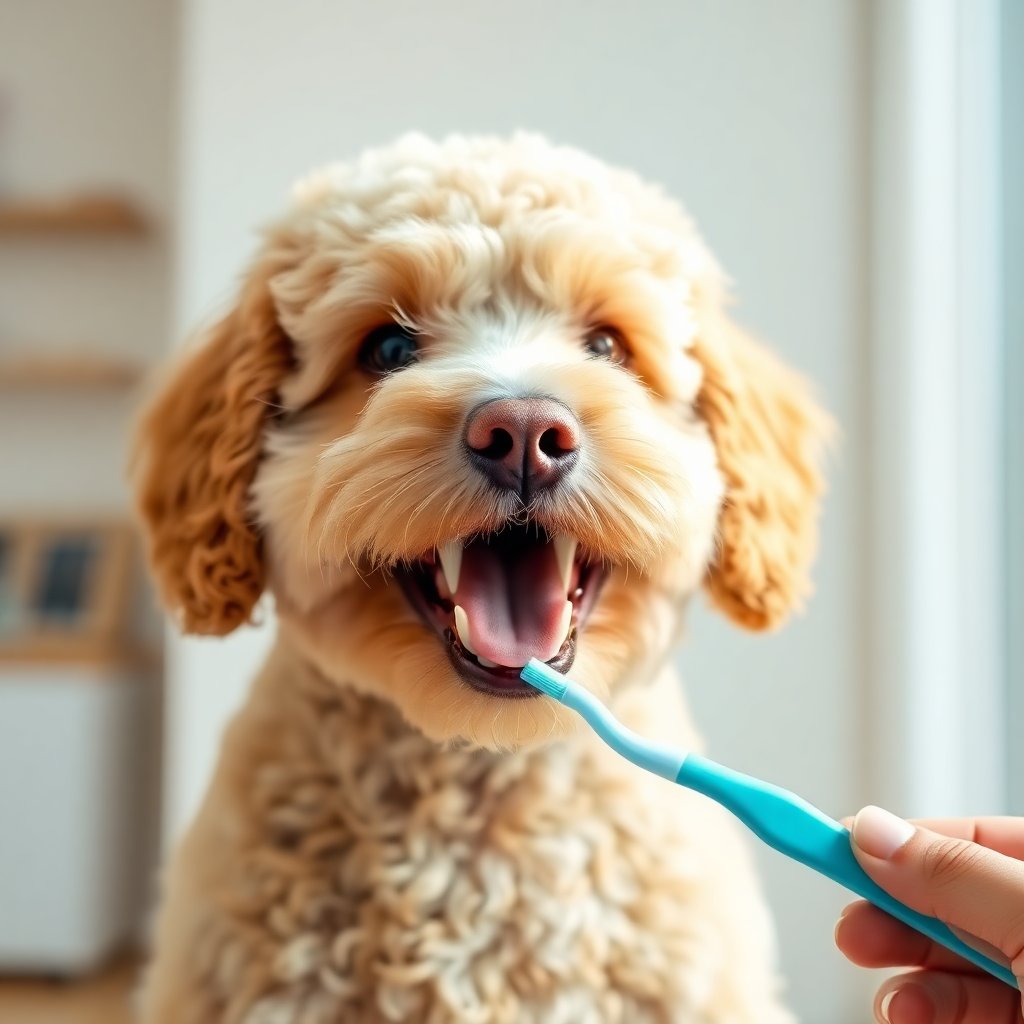
That fishy breath drifting up from your doodle's happy face is not just an annoyance—it is usually the first sign of trouble underneath the gum line. By the age of three, most dogs already show some degree of periodontal disease, and Labradoodles are no exception. Their affectionate, face-in-your-lap personality makes bad breath impossible to ignore, and their bearded muzzles trap food and moisture in ways that a short-coated dog's simply do not.
The reassuring part is that dental disease is one of the most preventable health problems your Labradoodle will ever face. A few minutes several times a week, the right tools, and a couple of smart chew choices can spare your dog painful extractions and spare you a four-figure vet bill down the road. Here is the plan that actually works for a doodle.
Why Labradoodles Need Extra Dental Attention
Periodontal disease is the single most common clinical condition in adult dogs, and it starts with plaque—a sticky film of bacteria that forms on the teeth within hours of eating. Left alone, plaque hardens into tartar in a couple of days, and tartar below the gum line is what drives inflammation, bad breath, tooth loss, and eventually bacteria that can travel to the heart, liver, and kidneys. According to the American Veterinary Medical Association, the disease is largely preventable with consistent home care and professional cleanings.
Doodles carry a few specific risk factors worth knowing:
- Bearded muzzles trap debris. That charming furnishing around the mouth holds onto kibble crumbs, wet food, and saliva, feeding the bacteria that cause plaque.
- Malocclusion runs in the mix. Because Labradoodles blend Poodle and Labrador jaw structures, some individuals inherit overbites, underbites, or crowded teeth that create hard-to-clean pockets.
- They live close to us. A dog who sleeps on the bed and licks your face is a dog whose oral bacteria you have a personal stake in managing.
- Standard and mini sizes differ. Smaller doodles, like many small-breed dogs, tend to have more crowded teeth and are often more prone to early tartar buildup.
None of this is cause for alarm. It just means dental care belongs on your doodle checklist right alongside coat grooming, not as an afterthought.
The At-Home Brushing Routine That Works
Brushing is the gold standard because it physically disrupts plaque before it can mineralize into tartar. Daily is ideal; realistically, three to four times a week still delivers most of the benefit and is a schedule busy owners can actually keep.
Start with the right supplies. You need a dog-specific toothpaste and a soft brush. Never use human toothpaste—the fluoride and the sweetener xylitol found in many human formulas are toxic to dogs. Enzymatic dog toothpastes in poultry or peanut-butter flavors do double duty: they break down plaque chemically and they make the whole thing feel like a treat.
→ Shop dog enzymatic toothpaste on Amazon
For the brush itself, you have two good options. A dual-headed dog toothbrush with a long handle gives you reach and control for a full-grown standard doodle, while a rubber finger brush offers more control and feels less intimidating to a nervous dog or a puppy.
→ Shop dog toothbrush and finger brush sets on Amazon
Acclimate slowly—this is the step people skip. If you have never brushed your doodle's teeth, do not go straight for a full scrub. Spend the first few days simply letting your dog lick the toothpaste off your finger so they associate it with something good. Next, run your finger along the outer surfaces of the teeth and gums. Then introduce the brush and let them investigate it. Only after your doodle is relaxed with all of that do you start actual brushing, beginning with just the front teeth for five to ten seconds.
The technique itself is simple. Lift the lip, hold the brush at a 45-degree angle to the gum line, and use gentle circular motions. Focus on the outer surfaces of the teeth, especially the large upper cheek teeth where tartar loves to accumulate—your dog's tongue does a decent job on the inner surfaces. Aim for the whole mouth over the course of a couple of minutes, and finish with praise or a small reward every single time. Consistency and a positive association matter far more than a perfect scrub.
If your doodle is prone to skin sensitivity around the muzzle, keep the beard clean and dry after brushing so trapped moisture does not irritate the skin. Our guide to the best labradoodle grooming tools covers the combs and clippers that keep that muzzle furnishing tidy.
Chews, Water Additives, and Dental Diets
Brushing is the foundation, but a few supporting products help fill the gaps between sessions—especially for the back teeth your brush struggles to reach.
Dental chews work by mechanical abrasion: the chewing action scrapes plaque off the tooth surface. Look for products carrying the Veterinary Oral Health Council (VOHC) seal, which means the product was tested and shown to actually reduce plaque or tartar rather than just claiming to. Size the chew to your doodle—a mini needs a smaller, softer chew than a 55-pound standard, and always supervise chewing to avoid a choking hazard.
→ Shop VOHC dental chews for dogs on Amazon
Water additives are the lowest-effort option: you add a measured amount to your dog's water bowl and it helps reduce the bacteria that cause plaque and odor. They are not a substitute for brushing, but for a doodle who fights the toothbrush, an additive is a genuinely useful backup. If your dog is a picky drinker, introduce it gradually so the new taste does not put them off water—hydration always comes first.
Dental diets and dental treats use kibble shaped and textured to scrub the teeth as the dog bites down. These can be a helpful piece of the puzzle, though they do not replace the outer-surface cleaning that brushing provides. Whatever you choose, avoid anything harder than you can dent with a fingernail—bones, antlers, and rock-hard nylon chews are a leading cause of painful tooth fractures.
A steady supply of fresh water matters more than owners realize, since a well-hydrated mouth produces protective saliva. If your doodle's beard makes drinking messy, a low-splash bowl helps; our roundup of beard-friendly water fountains for labradoodles walks through the best options.
Reading the Warning Signs
Dogs are remarkably good at hiding oral pain, so you have to look for it. Check your doodle's mouth every couple of weeks—lift the lip and look at the gum line for these signs:
- Persistent bad breath beyond normal doggy breath (that fishy or rotten smell is a red flag)
- Red, swollen, or bleeding gums, especially along the tooth margins
- Yellow or brown tartar crusting on the teeth
- Dropping food, chewing on one side, or reluctance to eat hard kibble
- Excessive drooling, pawing at the mouth, or facial swelling
- Loose, discolored, or missing teeth
Any of these warrant a vet visit. This article is general information and not a substitute for veterinary care—only your vet can diagnose gum disease and decide whether a professional cleaning is needed.
When Home Care Is Not Enough
Even with a flawless brushing routine, most dogs need periodic professional cleanings. A veterinary dental cleaning is performed under anesthesia so the vet can clean below the gum line, take dental X-rays to catch problems the eye cannot see, and remove hardened tartar that no home tool can touch. How often depends on the individual dog; some doodles need it yearly, others every two to three years.
Be cautious about so-called anesthesia-free dental cleanings offered at some grooming salons. As the American Kennel Club explains, these cosmetic cleanings scrape visible tartar off the crown but cannot address disease below the gum line where it actually matters—and they can give a false sense of security while problems progress underneath.
Budget for professional dental work as a normal part of dog ownership. Preventive cleanings cost far less than the extractions, antibiotics, and pain management that advanced periodontal disease requires. If cost is a concern, ask your vet about payment plans or pet insurance that covers dental illness, and start the home routine now so you can stretch the interval between professional cleanings as long as safely possible.
Building the Habit
The Labradoodles with the healthiest mouths are not the ones with the most expensive products—they are the ones whose owners built a small, repeatable habit. Pick a trigger you already do daily, like the after-dinner cleanup, and tack thirty seconds of brushing onto it. Keep the toothpaste and brush somewhere you will see them. Reward every session so your doodle looks forward to it.
Do that, layer in a VOHC chew and clean water, watch for the warning signs, and keep up with vet cleanings, and you will have a doodle who greets you with a healthy mouth and fresher breath for years. If you are still building out the rest of your care kit, our labradoodle grooming tools guide rounds out the routine.
Affiliate disclosure: This post contains Amazon affiliate links, and we may earn a small commission if you buy through them at no extra cost to you. It does not influence our recommendations.
As an Amazon Associate we earn from qualifying purchases. This article contains affiliate links; if you buy through them we may earn a small commission at no additional cost to you.